

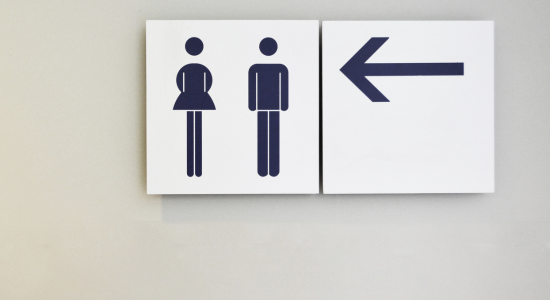
NHS England’s policy permitting trans women to use female-only facilities amounted to indirect sex discrimination – so ruled the Employment Tribunal in a recent case.
In LS v NHS England, the tribunal considered whether the NHS policy of allowing trans women (biological men) to use female toilets, changing rooms and showers amounted to indirect sex discrimination against LS on the grounds of her sex, religion, gender-critical beliefs (philosophical beliefs) or disability, and harassment. They concluded that LS was indirectly discriminated against and subjected to harassment on the grounds of her sex and gender-critical beliefs. The policy placed women, and in particular Muslim women and women with PTSD due to sexual or domestic violence, at a particular disadvantage. Although the tribunal noted that there was no statutory right for transgender individuals to demand access to single-sex facilities under current law and that the NHS aim was legitimate and genuine, it did not intend to cause discrimination or harassment – but the policy had that effect. The policy was not a proportionate means of meeting those aims, as other, less discriminatory alternatives were available.
The facts are that the NHS drafted a Trans Equality Policy, under which trans employees should consult and agree with their management when welfare facilities should change from one gender to the other. In 2022, NHS received an email informing them that a person was transitioning, and as a result LS attended a trans awareness presentation. She raised concerns by claiming the facilities would become mixed-sex and would be affected by her PTSD (sexual assault). She asked where she could find/use single-sex facilities. Her grievance was partially upheld, but as they were due to move to new premises, which had unisex single facilities, it was felt these could be used, as it was commonly accepted that trans women could use female-only facilities. They did, however, accept that the policy could disadvantage certain groups of women.
The question for the tribunal was whether the NHS could justify that disadvantage or not. LS accepted that the NHS had legitimate aims of respecting and protecting staff, visitors and their respective sensitivities, but the tribunal’s view was that blind reliance upon a policy and “good practice guidance” cannot justify an incorrect interpretation of the law. The tribunal understood that if a trans woman was prevented from using female single-sex facilities, they would face gender reassignment discrimination, but direct discrimination would fail if the exclusion was due to their biological sex. The NHS had an alternative measure to achieve its aim – they could have permitted transgender employees to use unisex facilities.
The NHS accepted that their policy of allowing trans women to use female-only facilities amounted to unwanted conduct and had the effect of violating LS’s dignity or creating a hostile, intimidating, degrading environment. The only question was whether it was reasonable for it to have that effect.
The message coming out from this case is that employers need to be very cautious and mindful of staff views, beliefs and sensitivities, particularly due to their sex, religion and philosophical beliefs. This can be an absolute minefield to understand and, more so, to implement. Employers should seek professional advice when faced with such dilemmas.