

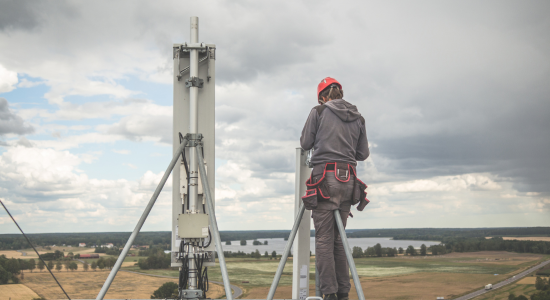
Following a recent report by the Health and Safety Executive (HSE), it was announced that during 2025–2026 there were 126 work-related deaths. Of these, 31 were caused by, or as a result of, working at height. This represents almost 25% of all work-related fatalities. Although working at height has long been recognised as a common and serious risk, it continues to be a leading cause of workplace deaths. This suggests that some employers' policies and procedures may not be adequate or effective. This article serves as a timely reminder of what is required.
What is Working at Height?
The Working at Height Regulations 2005 define working at height as "any work where a person could fall a distance liable to cause personal injury". This includes not only obvious high-risk locations such as roofs or scaffolding, but also tasks carried out on stepladders, platforms, or near fragile surfaces such as roof lights or stairwells. There is no stipulated minimum or maximum height; the potential for a fall resulting in injury is the key consideration.
Common Hazards
Falls from height (the leading cause of fatalities).
Unstable surfaces.
Falling or moving objects (affecting workers and members of the public).
Environmental factors (high winds, wet conditions and slippery surfaces).
Equipment failure.
Human error (failing to follow safety procedures or use harnesses and other personal protective equipment (PPE)).
What is Needed?
Employers must carry out thorough planning before undertaking any work at height. Wherever possible, work should be carried out at ground level. Where working at height cannot be avoided, employers must:
Plan the work thoroughly.
Carry out a suitable and sufficient risk assessment.
Provide appropriate equipment that is suitable for the task.
Inform and train workers about the risks of working at height and the control measures in place to safeguard their safety.
Carry out thorough pre-use checks on all equipment.
Designate an exclusion zone around the work area.
Monitor weather conditions.
Prepare and regularly review an emergency rescue plan.
By properly planning and preparing the work, employers can significantly reduce the risk of incidents, injuries and fatalities. Remember, the safety of your employees - your most valuable asset - is your responsibility. Incidents, injuries and fatalities can have serious, and often life-changing, consequences for employees, their families, employers, the NHS, insurers, and may result in criminal prosecution and civil compensation claims.
Call the Health and Safety Advice Line to learn more about your duties and obligations, and how to safeguard the health and safety of your workforce.