
Under the Control of Substances Hazardous to Health Regulations (COSHH) 2002, employers are under statutory duties to protect workers from the health risks associated with hazardous substances. These substances can cause harm through inhalation, skin contact, ingestion or injection, and include chemicals (solvents, paints or cleaning agents), dusts (sawdust, flour and silica), fumes, vapours and mists, gases, and biological agents. The legislation requires employers to prevent, control or minimise exposure to substances that can harm the health, safety and welfare of employees. The aim is to protect employees, contractors and the public by ensuring the safe use, handling and storage of these substances.
Legal Requirements
-
Conduct a risk assessment to identify the substance, its form, the potential hazards, who is likely to be affected, and evaluate the potential exposure and the nature and extent of the likely harm.
-
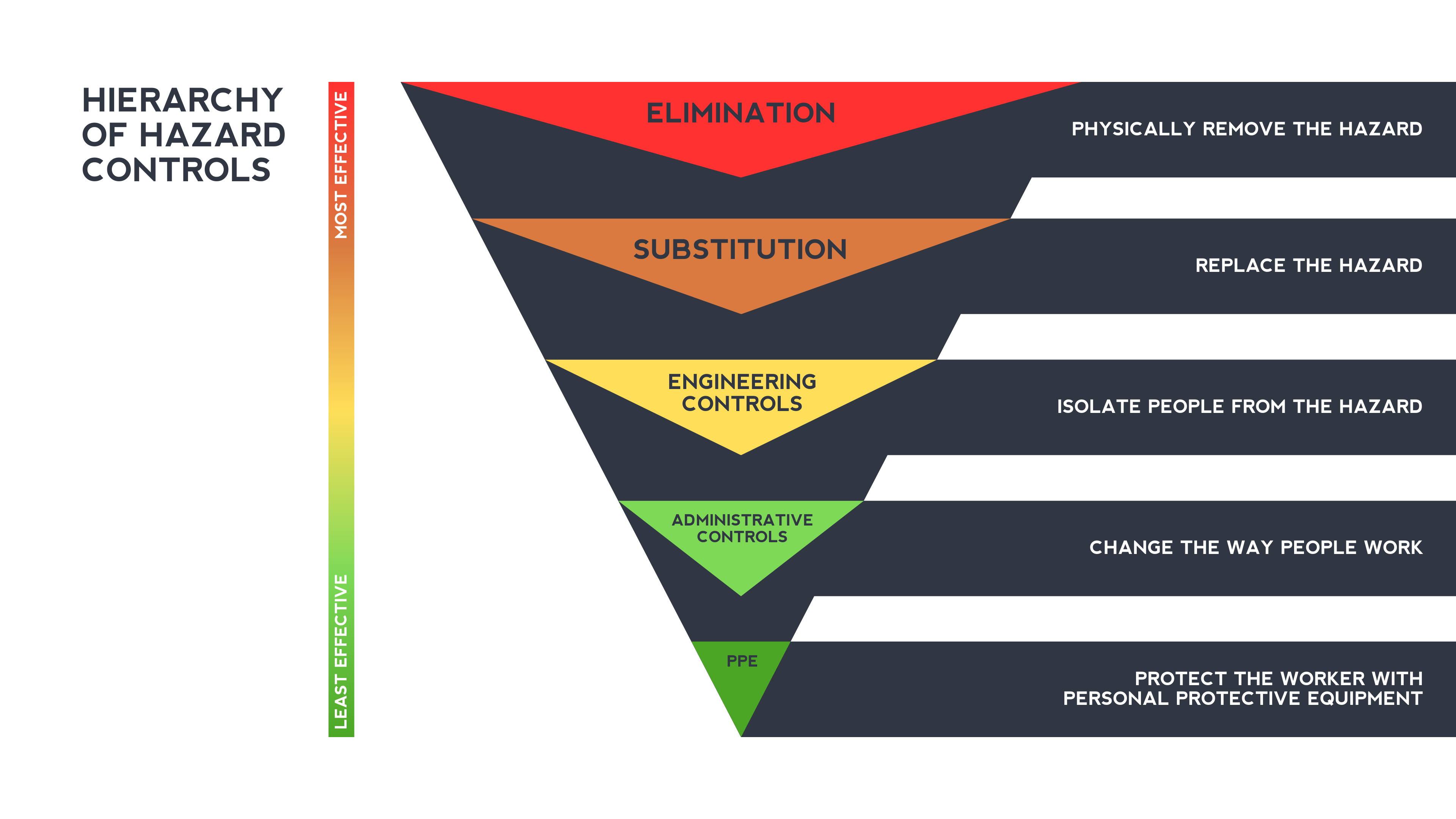
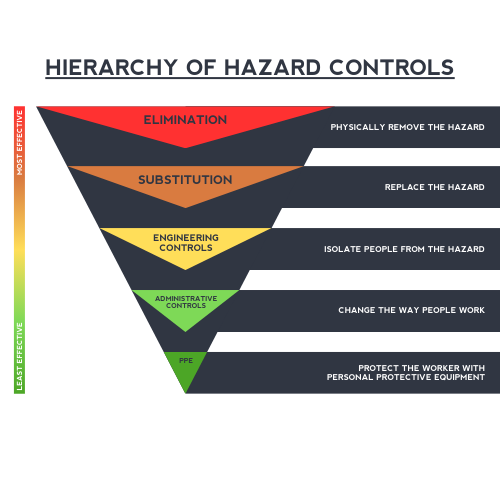
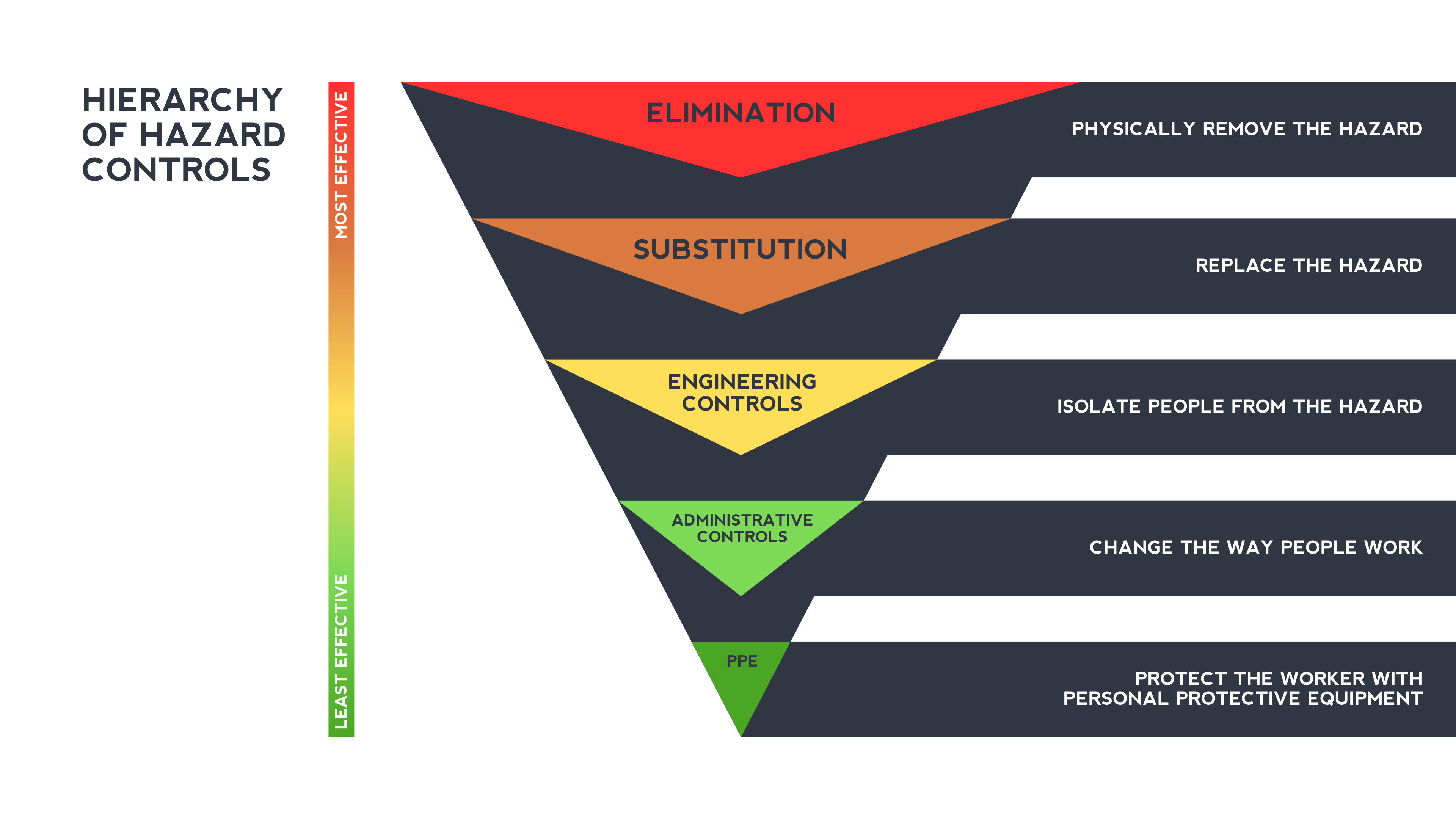
Implement control measures using the hierarchy of controls (shown above) — eliminate the risk where possible, or use alternative, less harmful substances. Introduce engineering controls such as ventilation and safe working procedures and, as a last resort, provide personal protective equipment (PPE).
-
Provide training and instruction to staff on the risks and on the safe use, handling and storage of substances, as well as the correct use of PPE.
-
Carry out and provide annual health surveillance for staff to monitor their health and ensure early detection of problems.
Businesses, and bakeries in particular, should note that the HSE has announced a new campaign of inspections targeting large bakeries, aimed at reducing staff exposure to flour dust. Exposure to flour dust is one of the most common causes of occupational asthma and other respiratory conditions. Even routine bakery tasks can cause microscopic particles to become airborne and remain so long after the task has been completed. Exposure increases when operating in confined areas, without effective ventilation or appropriate PPE. Symptoms of exposure include:
-
Wheezing
-
Breathlessness
-
Chest tightness
-
Persistent coughing
If left untreated, these symptoms can develop into asthma (often chronic and irreversible), increased risk of infections, and reduced lung function.
What Should I Do?
This new enforcement wave should serve as a wake-up call. Employers must ensure they:
-
Conduct suitable and sufficient COSHH assessments.
-
Introduce control measures aligned with the hierarchy of controls — prioritise elimination and substitution. Provide PPE with face-fit testing and training on proper use, storage and handling.
-
Ensure ventilation and extraction systems are fit for purpose and properly maintained.
-
Provide employees with training on the safe handling of flour and other dusty ingredients.
-
Ensure health surveillance is robust, recorded and acted upon.
The Health and Safety Helpline is available on 01455 852 028 to advise you on your statutory obligations, help you remain compliant, protect employee safety, and minimise the risks of staff absence, civil claims and HSE prosecutions.